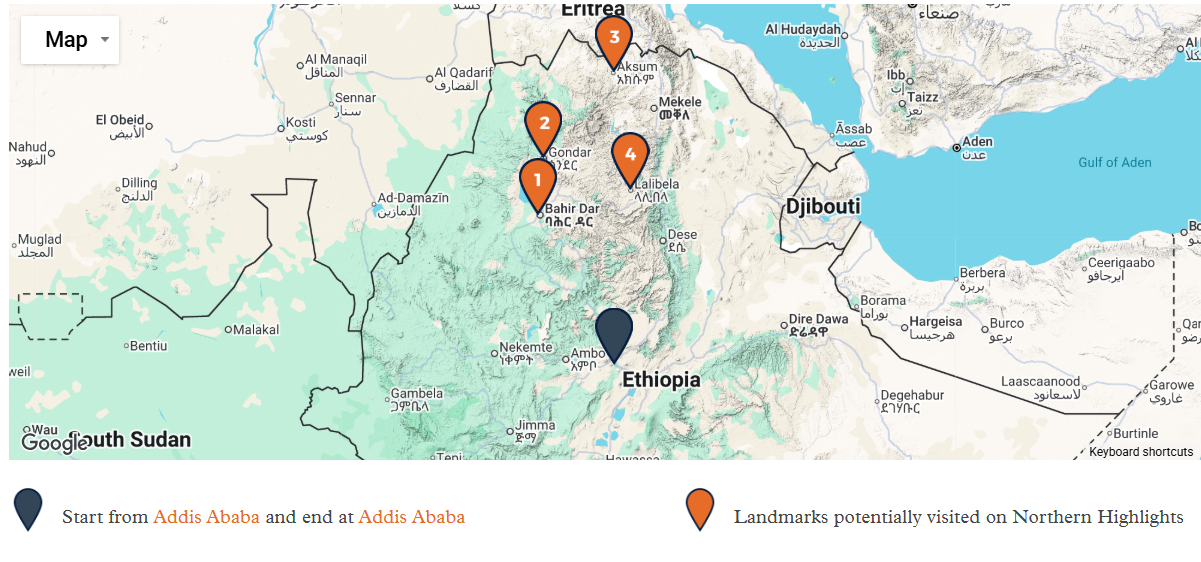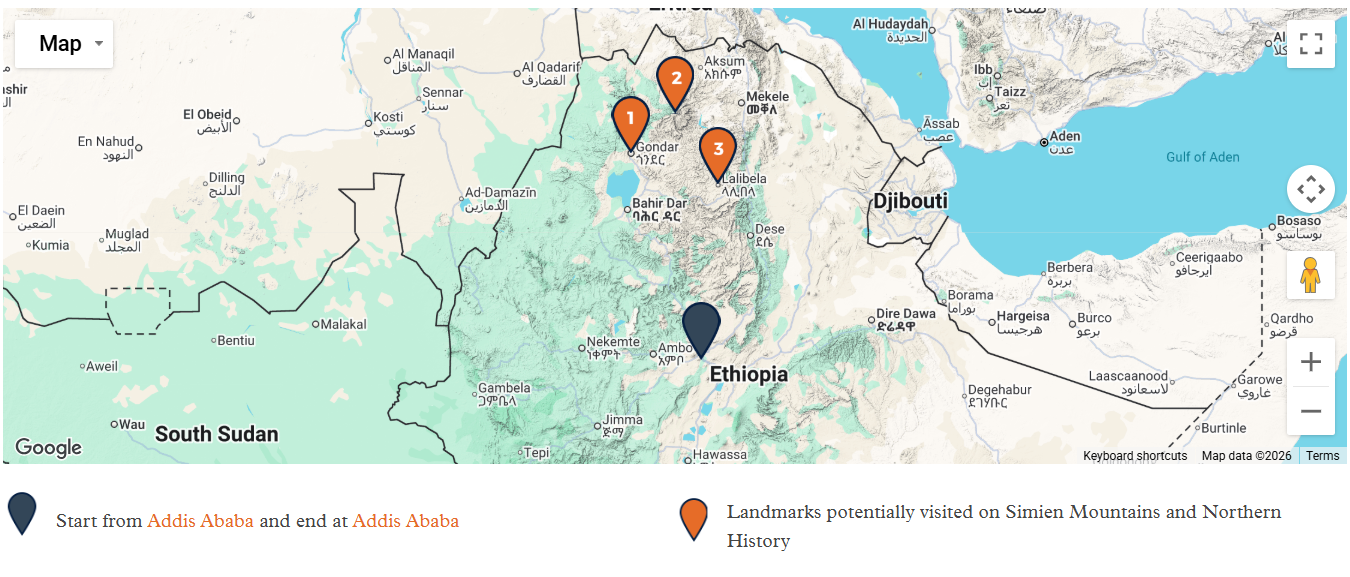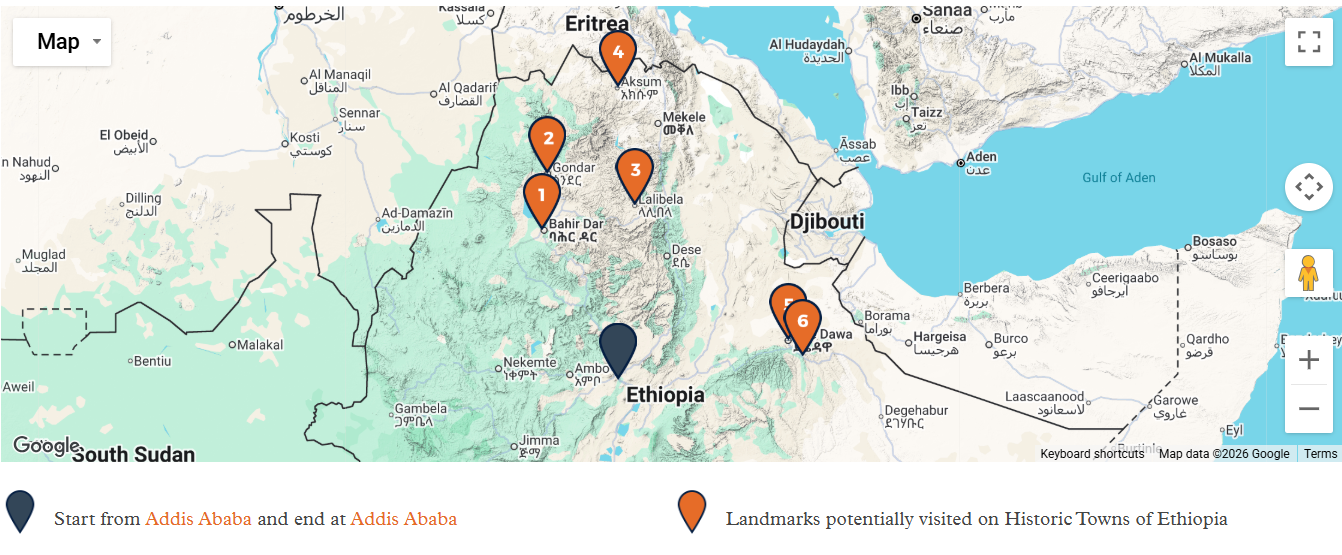

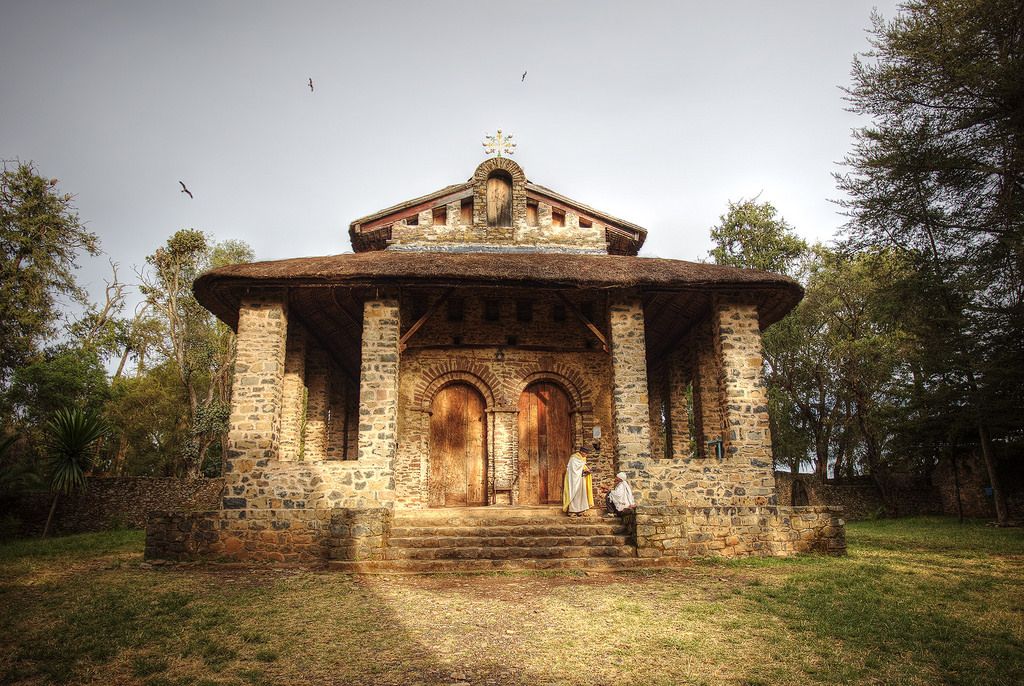
Discover the Northern Highlights of Ethiopia—the perfect introduction for travelers short on time but eager to experience the country’s rich history and culture. This classic route takes you through Ethiopia’s most iconic destinations, including the historic cities of Gondar, Lalibela, and Axum, where ancient monuments, rock‑hewn churches, and royal castles reveal centuries of heritage. Along the way, enjoy breathtaking landscapes, dramatic highland vistas, and encounters with Ethiopia’s unique wildlife. Ideal for first‑time visitors, this journey blends cultural immersion with natural beauty, offering an unforgettable glimpse into the heart of northern Ethiopia.
Itinerary
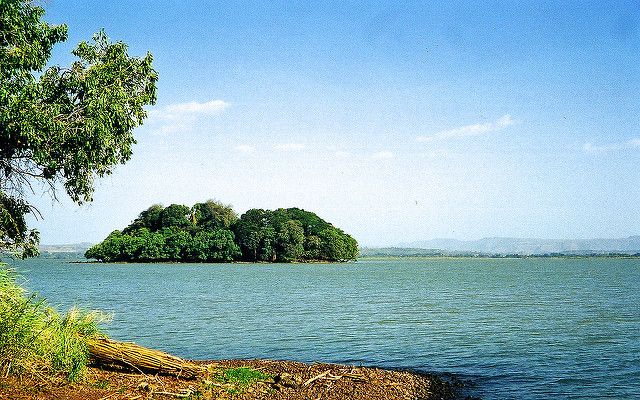
From Addis Ababa, take a short flight north to Bahir Dar, one of Ethiopia’s most beautiful destinations. Upon arrival, your guide will accompany you on a scenic boat trip across Lake Tana, Ethiopia’s largest lake, renowned for its natural beauty, historic monasteries, and rich wildlife.
Explore the ancient monasteries of Lake Tana, located on islands and peninsulas across the lake. Continue through the lush surroundings of the Zege Peninsula, where coffee plantations provide an opportunity to experience local coffee culture, sample traditional brews, and meet local farmers.
Lake Tana and its surrounding islands are also home to diverse wildlife. During your boat journey, keep an eye out for white pelicans, birdlife, and the unique air-breathing catfish found in the lake.
The boat excursion concludes at Zege Peninsula, followed by a short walk to Ura Kidane Mehret, one of the most remarkable churches around Lake Tana. The church is particularly famous for its beautifully preserved centuries-old religious paintings and colorful frescoes, offering a fascinating glimpse into Ethiopia’s artistic and religious heritage.
Visit the Magnificent Blue Nile Falls
Later, travel toward Blue Nile Falls, one of Ethiopia’s most spectacular natural attractions. Located where the Blue Nile begins its journey from Lake Tana, the falls drop approximately 42 meters, creating an impressive cloud of mist. Known locally as Tis Abay, meaning “Smoking Water,” the powerful spray can be felt from a considerable distance.
Continue along the Blue Nile to see a historic stone bridge dating to the 17th century, traditionally associated with the reign of Emperor Fasilides and Ethiopia’s historic bridge-building heritage.
This journey combines Lake Tana boat tours, historic Ethiopian monasteries, coffee culture, wildlife, Blue Nile Falls, and centuries-old heritage sites, making Bahir Dar an ideal destination for travelers seeking both nature and culture in Ethiopia.
Begin your day with an early morning drive of approximately 3.5 hours to Gondar, the historic imperial capital of Ethiopia. Known for its remarkable castles, churches, and royal heritage, Gondar offers a fascinating journey into the country’s medieval and imperial history.
Your first stop is Debre Berhan Selassie Church, a renowned Ethiopian Orthodox church whose simple stone exterior contrasts beautifully with its richly decorated interior. Step inside to admire the church’s colorful frescoes and traditional Ethiopian religious artwork, including its famous painted ceiling.
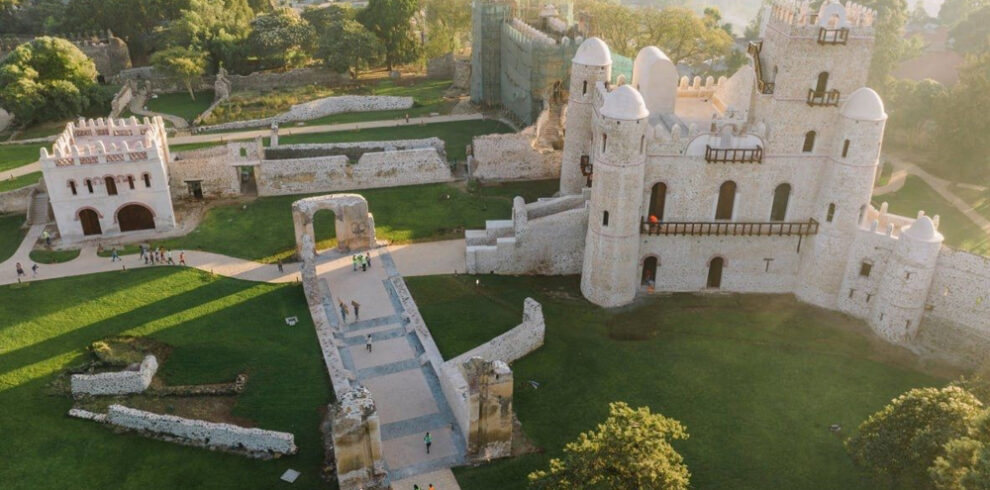
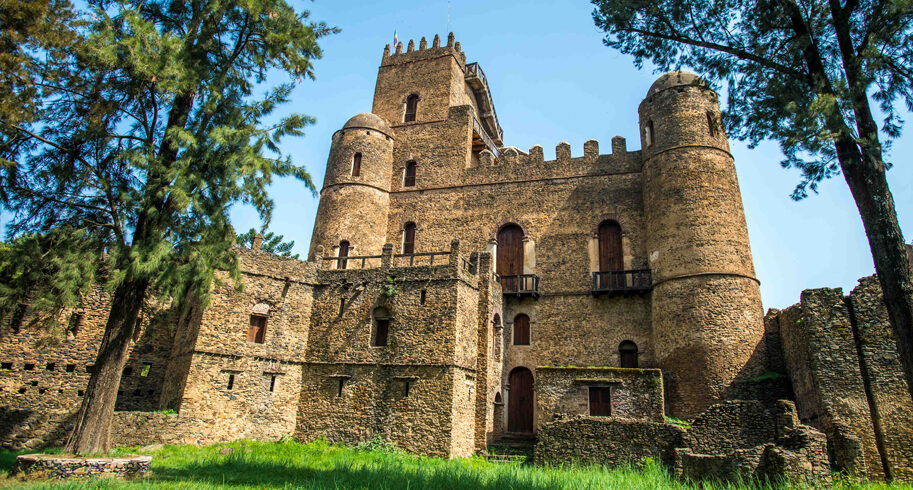
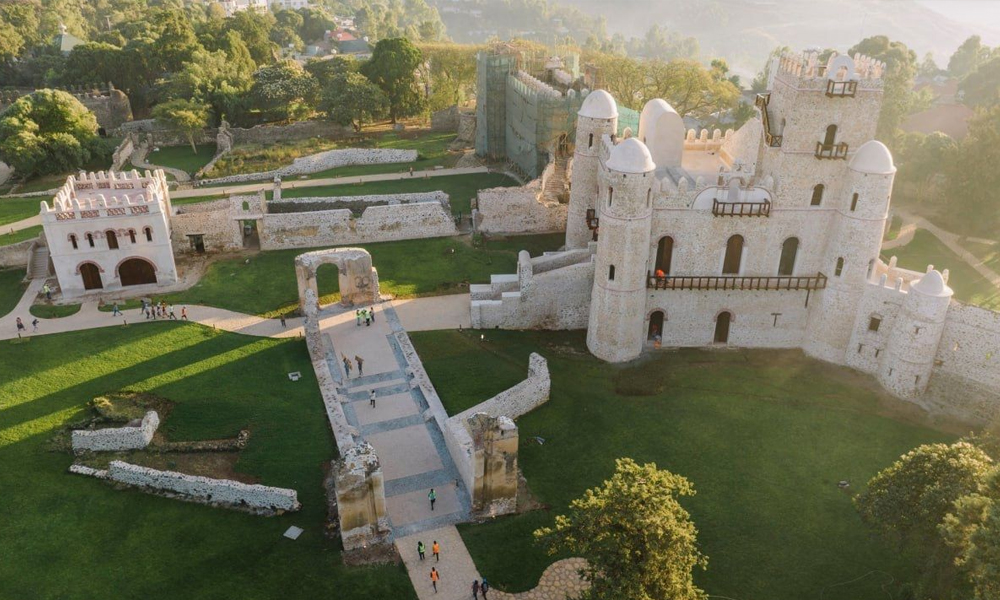
Continue to Fasil Gebbi, Gondar’s historic Royal Enclosure, often described as the “Camelot of Africa.” Founded in the 17th century by Emperor Fasilides, the complex became the center of Ethiopia’s imperial power and was expanded by successive emperors and rulers.
The Royal Enclosure covers approximately 70,000 square meters and features an impressive collection of historic buildings, including royal palaces, libraries, royal baths, lion houses, and other structures associated with Ethiopia’s imperial court. The site also reflects a fascinating blend of architectural influences, including Ethiopian, Aksumite, Portuguese, Indian, and Moorish styles.
Explore the remarkable stone architecture and discover how generations of Ethiopian rulers expanded Gondar’s royal legacy, making the city one of the country’s most important historical and cultural destinations.
Optional Visit to the Awramba Community
For travelers interested in Ethiopian culture and community-based tourism, there is an option to visit the Awramba community. This unique community offers an opportunity to learn about its distinctive social values, traditions, cooperative way of life, and approach to community development.
A visit to Gondar provides an exceptional combination of Ethiopian history, royal architecture, religious heritage, traditional art, and cultural experiences, making it an essential stop on a northern Ethiopia journey.
Take a morning flight from Gondar to Axum, one of Ethiopia’s most historically significant destinations and a UNESCO World Heritage Site. Known as the center of the ancient Kingdom of Aksum, the city is deeply connected to Ethiopia’s religious, archaeological, and cultural heritage.
Spend the day exploring Axum’s remarkable historical sites, beginning with its famous stelae fields. These enormous granite monuments are among the most impressive remnants of the ancient Aksumite civilization, with some dating back to the 4th century AD and rising more than 23 meters high.
Continue your journey through Axum’s historic streets and visit the renowned Church of St. Mary of Zion, one of Ethiopia’s most important religious sites. According to Ethiopian tradition, the church is associated with the Ark of the Covenant, believed to be kept within the church complex.
Axum is also traditionally associated with the Queen of Sheba, adding another fascinating layer to the city’s long and legendary history. Explore the ancient ruins, monumental obelisks, royal heritage, and sacred sites that make Axum a must-visit destination for travelers interested in Ethiopian history, archaeology, religion, and ancient civilizations.
With its extraordinary Aksumite obelisks, ancient stelae, historic churches, and royal traditions, Axum offers a unique glimpse into one of Africa’s most influential ancient kingdoms.
Take a late-morning flight from Axum to Lalibela, one of Ethiopia’s most iconic cultural and historical destinations. Spend the afternoon exploring the extraordinary rock-hewn churches of Lalibela, a UNESCO World Heritage Site and one of the country’s most remarkable examples of medieval architecture.
Begin your exploration with the northwestern cluster of churches, including Bet Medhane Alem, Bet Maryam, Bet Meskel, and Bet Danaghel. Carved directly into the surrounding volcanic rock, these remarkable churches showcase the architectural skill, craftsmanship, and religious devotion of medieval Ethiopia.
Accompanied by knowledgeable local guides, discover the history, traditions, and spiritual significance behind Lalibela’s remarkable churches. Learn how these sacred structures continue to serve as important places of worship for Ethiopian Orthodox Christians.
If your visit coincides with one of Lalibela’s religious festivals, you may have the opportunity to witness vibrant ceremonies, traditional prayers, music, and processions. Experiencing Lalibela during a major religious celebration offers a rare and unforgettable insight into Ethiopian Orthodox culture and living heritage.
Lalibela is an essential destination for travelers seeking Ethiopian history, ancient architecture, religious heritage, and authentic cultural experiences.
Begin your day with an early morning Ethiopian Orthodox service, offering a unique opportunity to experience the spiritual traditions of Lalibela before continuing your exploration of its remarkable rock-hewn churches.
Visit the southeastern cluster of Lalibela churches, including Bet Gabriel-Rufael, Bet Merkorios, Bet Amanuel, and Bet Abba Libanos. Carved from the volcanic rock, these extraordinary churches demonstrate the architectural skill, craftsmanship, and religious devotion that have made Lalibela one of Ethiopia’s most important cultural destinations.
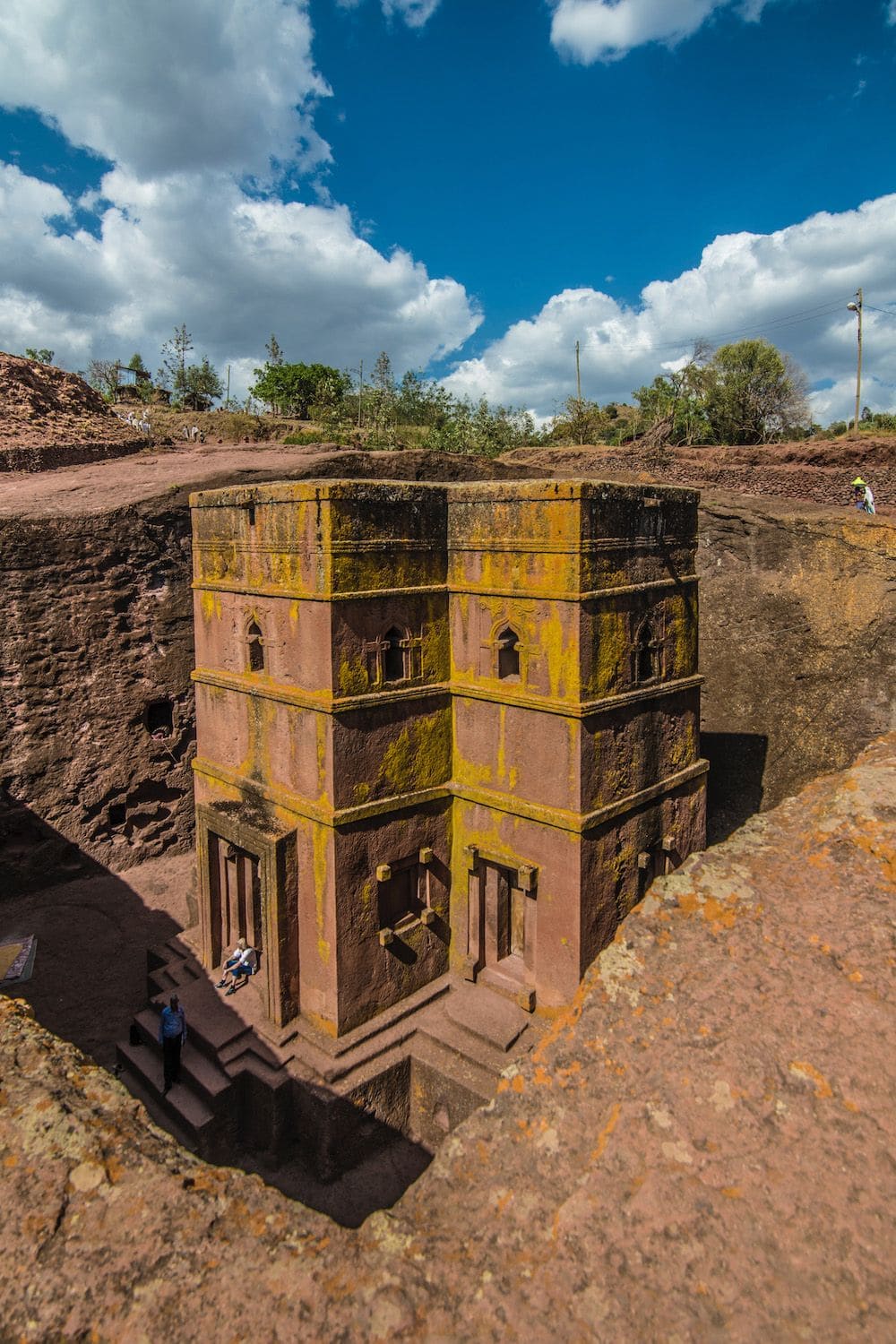
Continue to Bet Giyorgis (Church of St. George), the most famous and instantly recognizable church in Lalibela. Carved in the shape of a cross from a single block of rock, Bet Giyorgis is exceptionally well preserved and is widely regarded as one of the highlights of any Lalibela tour.
Optional Hikes from Lalibela
In the afternoon, choose between two memorable hiking experiences.
For an immersive cultural and historical experience, take a 4–7-hour hike to Yimrehane Kristos, an often-overlooked gem near Lalibela. Unlike Lalibela’s famous rock-hewn churches, Yimrehane Kristos was constructed from stone and wood rather than excavated from solid rock. The church is believed to predate many of Lalibela’s famous churches by nearly a century. Its beautifully decorated interior contrasts dramatically with the ancient mummified remains found in the surrounding caves, creating a fascinating and atmospheric historical site.
Alternatively, embark on an approximately 5-hour hike to Asheton Maryam, a historic church set high in the mountains overlooking Lalibela. The journey combines mountain scenery, spiritual heritage, and spectacular views of the surrounding Ethiopian highlands.
Experience Lalibela After Dark
End your day with dinner at Ben Abeba, one of Lalibela’s most distinctive restaurants. Its unusual architecture, panoramic setting, and memorable dining experience provide a fitting conclusion to a day filled with Ethiopian history, religious heritage, hiking, and cultural discovery.
Catch your flight from Lalibela to Addis Ababa, marking the end of your Northern Ethiopia cultural and historical journey.
Upon arrival in Addis Ababa, connect with your international flight home or continue your onward journey through Ethiopia or to your next destination.
This final travel day provides a convenient connection after exploring Lalibela’s rock-hewn churches, ancient heritage, and remarkable cultural landscapes, bringing an unforgettable Ethiopian adventure to a close.